
How to Choose a Self-Loading Drainage Cabin? Practical Selection Guidance for Procurement and Engineering Professionals
From Application Requirements to Structural Configuration: Clarifying the Selection Logic for Self-Loading Drainage Cabins
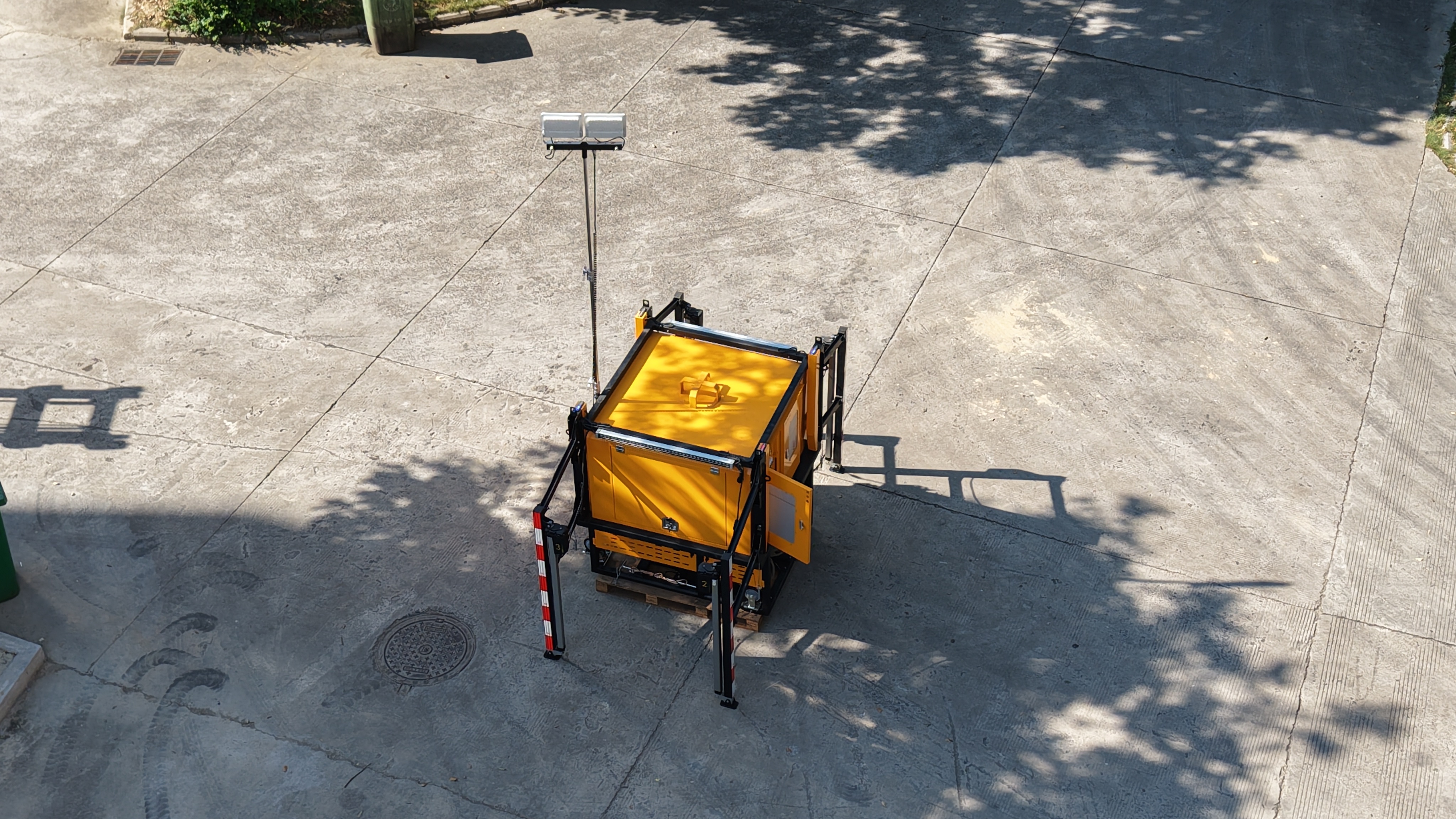
1. Start with the Scenario: What Problems Does a Self-Loading Drainage Cabin Solve?
A self-loading drainage cabin is a type of mobile equipment that integrates drainage pump sets, power sources, control units, and cabin structure. It is commonly used in scenarios such as urban waterlogging emergencies, municipal pipeline network repairs, basement water removal, and mining and agricultural irrigation and drainage. Compared with fixed pump stations, its value lies in rapid arrival, rapid deployment, and rapid withdrawal; compared with ordinary mobile water pumps, it stores equipment, piping, and power provisions within the cabin, reducing on-site temporary assembly.
The first step in selection is not to review the configuration sheet, but to clarify the operating target: Is it clean water, sediment-laden water, or rainwater containing minor impurities? Does the work site have lifting conditions? Is the on-site power supply stable? These questions determine the direction of the cabin structure, pump type, and supporting solutions. The supporting experience accumulated by Anhui Rongpan Technology Co., Ltd. in the field of emergency lighting and power generation equipment is also often applied to the coordinated design of power and lighting for drainage cabins.
2. Loading and Unloading Method Is the First Key Decision Point in Selection
Self-loading capability directly affects response efficiency. During procurement, it can be assessed from three aspects:
- Loading mechanism type: Common types include crane-mounted, hydraulic self-loading, and towed. Crane-mounted types rely on on-site lifting equipment and suit locations with fixed lifting conditions; cabins with self-loading mechanisms depend less on site and equipment, making them suitable for multi-location rotation operations.
- Chassis and mobility: Whether transport with the vehicle is required and whether it must adapt to narrow streets and muddy ground will influence the choice of cabin dimensions and support structure.
- Deployment and retraction time: In emergency scenarios, the fewer steps for connection, wiring, and startup, the better. During selection, attention should be paid to whether the cabin's piping and electrical interfaces are pre-integrated.
It should be noted that self-loading mechanisms vary significantly among manufacturers. For detailed parameters such as specific load capacity and loading angle, please contact us. Judgments should not be made solely on promotional claims.
III. Drainage capacity and power matching should be evaluated as a whole
Drainage capacity should not be judged by single-pump specifications alone, but by the overall matching of the pump unit with power, piping, and control systems. During procurement, consider the following:
- Pump type and passability: For water containing impurities, attention should be paid to impeller structure and flow passage design to avoid frequent clogging.
- Power source: Mains power, generator sets, and hybrid power supply each have applicable scenarios. For field locations without stable power, the power margin and fuel storage method of generator support deserve more attention.
- Control and protection: Whether functions such as liquid level control, overload protection, and phase-loss protection are complete directly affects reliability during unattended operation.
- Piping and interfaces: Drainage pipe diameter and quick-coupling specifications should connect with the existing on-site pipeline network to reduce adapters.
The specific values of the above indicators vary with project conditions. It is recommended that during the selection stage, targeted solutions be requested from suppliers based on on-site head, flow requirements, and media conditions.
IV. Cabin structure and O&M costs are often underestimated
The cabin serves as the long-term carrier for the equipment. Engineering personnel should focus on the cabin's protection rating, anti-corrosion treatment, ventilation and heat dissipation, and maintenance space. Drainage operations involve humid and dusty environments, making moisture-proof design for the electrical components inside the cabin particularly critical. In addition, whether auxiliary configurations such as lighting, warning devices, and fire-fighting equipment positions are reserved will affect operational safety at night and in complex site conditions.
Regarding O&M costs, key evaluation points include: whether wear parts are easy to replace, whether the control system facilitates fault diagnosis, and whether the manufacturer can provide spare parts and technical support. Anhui Rongpan Technology Co., Ltd., based in Hefei Xinzhan District, provides R&D and sales of emergency equipment for power, municipal, fire-fighting, mining, and agricultural sectors. Buyers may assess the supplier's responsiveness and service radius in light of their own project timelines.
V. Recommendations for Selection and Implementation
In summary, the selection of self-loading drainage cabins should follow the approach of "scenario first, loading/unloading defines configuration, capability matching, and O&M as a fallback": first clarify the medium and site conditions, then determine the loading/unloading and travel methods, subsequently verify drainage and power support, and finally evaluate the cabin structure and service assurance. It is recommended that procurement and engineering personnel organize on-site surveys during actual selection, itemize requirements into a checklist, and require suppliers to provide verifiable solution descriptions. For parameter details and adaptation solutions, further communication can be made through official channels.