
Mobile Lighting Towers vs. Self-Loading Lighting Towers: Key Selection and Deployment Considerations for Construction Site Lighting
A Practical Reference for Engineering Procurement: From Mobility and Loading Efficiency to On-Site Adaptability
1. Why Construction Sites Need Dedicated Lighting Tower Equipment
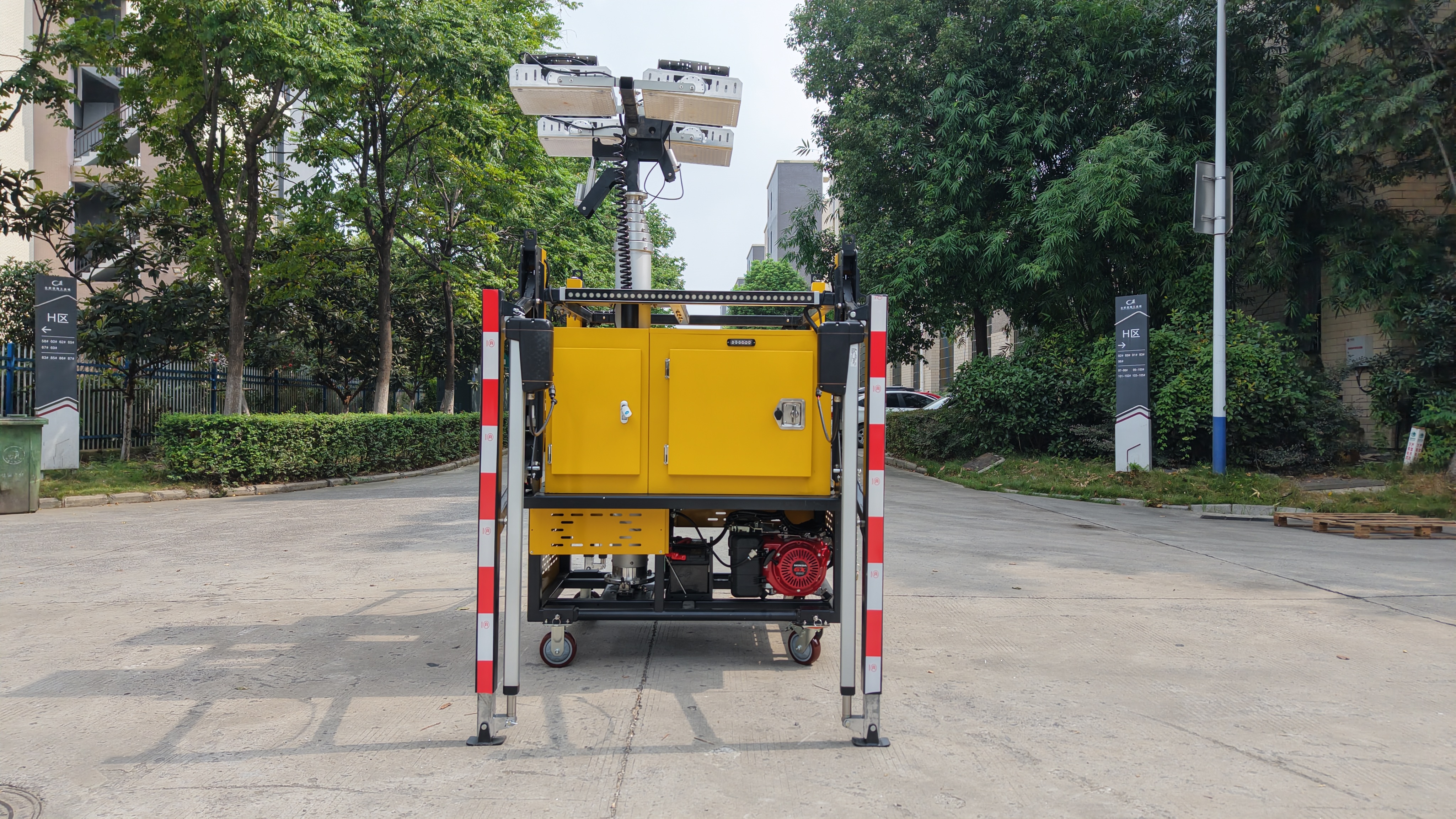
Lighting requirements on construction sites are fundamentally different from those of permanent building lighting: work areas move continuously with project progress, power supply conditions are often constrained, and work safety requirements under nighttime or low-light conditions are high. Temporary cabling is not only inefficient but also poses hazards such as cable wear and exposed connectors. Mobile lighting towers integrate the light source, lifting mechanism, and power supply system onto a movable carrier, enabling rapid arrival at work points and establishment of lighting coverage, thereby reducing the management costs associated with temporary wiring. For scenarios such as road construction, municipal emergency repair, mining operations, and nighttime agricultural work, the mobility advantages of such equipment are particularly evident.
Anhui Rongpan Technology Co., Ltd. specializes in the R&D and sales of emergency lighting and power generation equipment, serving the power, municipal, firefighting, mining, and agricultural sectors, with a focus on on-site deployment efficiency and working condition adaptability in product design.
2. Differences and Application Scenarios of Mobile Lighting Towers and Self-Loading Lighting Towers
Mobile lighting towers are typically relocated by towing, manual pushing, or vehicle-mounted transport, making them suitable for scenarios with relatively fixed work sites and moderate relocation frequency, such as municipal road maintenance, park construction, and temporary storage yards. Their structure is relatively simple, operation is easy to learn, and routine maintenance is convenient.
Self-loading lighting towers emphasize the equipment's own loading and unloading capability, enabling boarding, alighting, or cross-region transfer without the assistance of lifting equipment. They are suitable for projects with frequent relocation and no on-site lifting conditions, such as multi-point emergency repairs, segmented construction of linear projects, and emergency support. During procurement, the following dimensions can be used for evaluation:
- Relocation frequency: For frequent relocation, prioritize self-loading structures to reduce dependence on cranes and manual labor.
- Site conditions: When roads are narrow or space is limited, pay attention to equipment dimensions and steering flexibility.
- Operating duration: For long-term continuous lighting, focus on power supply method and battery life configuration. Please contact us for specific parameters.
- Environmental adaptability: Under conditions such as sandstorms, rain and snow, and low temperatures, confirm the protection design and startup method.
III. Engineering Key Points in Deployment and Use
The quality of deployment after the equipment arrives directly affects lighting performance and operational safety. First, choose a location with level terrain and a stable foundation, and avoid directly extending the lifting mechanism on soft backfill soil or slopes. Second, lighting coverage is related to lamp panel height and angle; adjust the projection direction according to the shape of the work area to reduce the impact of glare on traffic areas. Third, power supply lines should be protected against crushing and water accumulation, and connectors should be kept dry.
For self-loading lighting towers, loading and unloading operations should be performed by trained personnel in strict accordance with the operating sequence, and operations should be avoided when outriggers are not fully extended or properly locked. Before relocation, confirm that the light mast is reset and components are secured to prevent loosening during transport.
IV. Procurement Selection and Operation & Maintenance Recommendations
During selection, buyers can first clarify three questions: the area and illuminance requirements for lighting coverage, average daily operating duration and power supply conditions, and relocation method and frequency. On this basis, communicate configuration plans with the supplier to avoid simply comparing prices while ignoring suitability for operating conditions. Anhui Rongpan Technology Co., Ltd. recommends that project owners provide site layout drawings and operating time information before procurement so that targeted configuration recommendations can be made.
For operations and maintenance, it is recommended to establish equipment usage records and regularly inspect the lifting mechanism, electrical connections, and lighting fixtures. During prolonged storage, keep the battery within a reasonable charge range and perform periodic maintenance as instructed. Please contact us for detailed technical specifications and configuration options.