
Trailer Chassis of Mobile Light Towers: Key Details to Watch During Supplier Audits
From Running Gear to Outrigger Layout: Decoding the Engineering Language of Light Tower Chassis
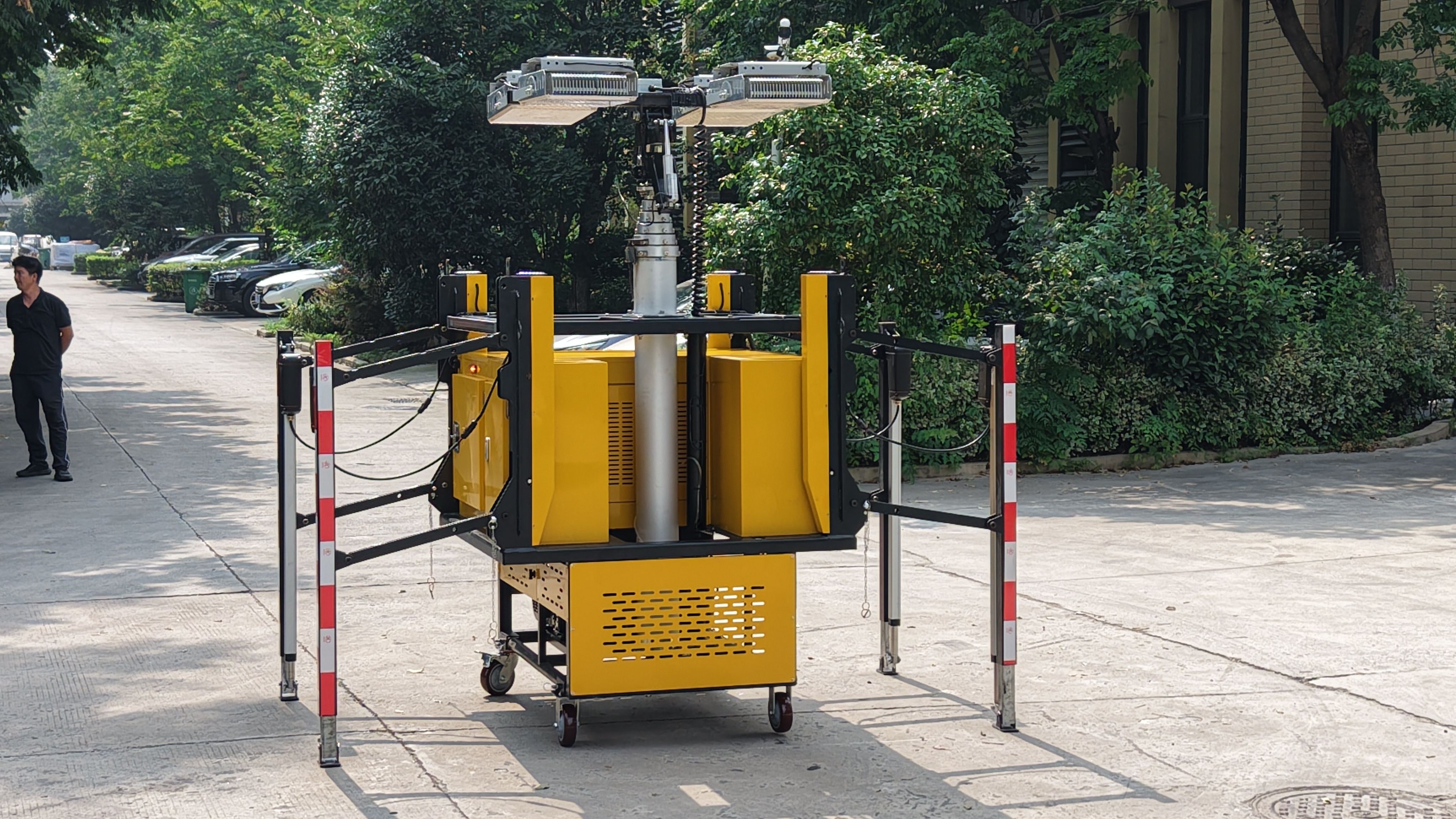
Why the Chassis Deserves Separate Attention
Many procurement personnel, when selecting mobile light towers, focus on luminaire power, lifting height, and generator sets, while the chassis is often treated as a component that is qualified by default. In actual use, the arrival time, lighting stability, and relocation efficiency of a light tower are largely determined by the chassis. No matter how bright the lights are, if the tower sways noticeably during towing, the whole unit shakes after the outriggers are deployed, or rust on the chassis after rain causes wiring short circuits, on-site operations will be interrupted. Therefore, examining the chassis as an independent subject is a habit worth establishing for procurement and engineering personnel.
It should be noted that chassis designs vary considerably among manufacturers. This article does not address specific parameters; for details such as load capacity, dimensions, and braking configurations, it is recommended to request documentation from the supplier or arrange an on-site sample inspection during the selection stage.
Running Gear: Start with Wheel Configuration and Towing Compatibility
Mobile lighting towers commonly use a trailer-type structure, and the core issue of the running gear is "whether it behaves well when towed." During a factory audit, several aspects can be examined:
- Ratio of track width to wheelbase: A chassis with too narrow a track and too short a wheelbase tends to sway left and right during high-speed towing. Engineers generally prefer a layout with a relatively wide track and a lower center of gravity.
- Drawbar and coupler: The welding quality of the drawbar and whether the coupler specifications match commonly used towing vehicles directly affect transfer efficiency. If the coupler is a standard specification, on-site replacement and borrowing are more convenient.
- Tires and suspension type: Different working conditions impose different damping requirements. The impact on the chassis differs noticeably between gravel roads on construction sites and municipal asphalt roads. During procurement, the supplier's adaptation approach can be discussed based on the main use scenarios.
These aspects cannot be judged from samples alone. It is recommended to request a full-machine towing demonstration during the factory audit, or at least observe the chassis welds, connector thickness, and fastening methods.
Outriggers and Leveling: The Hidden Factor Determining Lighting Stability
After the lighting tower arrives on site and the mast is raised, the wind resistance and anti-overturning capability of the entire machine depend on the outrigger system. What is easily overlooked during procurement is the layout logic of the outriggers, not just their quantity.
- Outrigger span: The larger the span, the wider the support base of the entire machine, and the better the stability after the mast is raised. The span is related to chassis dimensions and should be considered together with the stowing method in transport condition.
- Leveling method: Mechanical screw outriggers and hydraulic outriggers each have their applicable scenarios. The former has a simple structure and low maintenance threshold, while the latter saves effort in adjustment. Engineers can weigh the options based on on-site ground conditions and available operating manpower.
- Connection between outriggers and chassis: Reinforcement plates, pin specifications, and locking structures at the connection points are parts prone to loosening during long-term use and can be specifically observed during the factory audit.
A practical observation method is to have the supplier complete a full outrigger deployment and mast raising on level ground, then observe whether the entire machine shows visible swaying and whether the chassis shows obvious deformation after the outriggers are deployed.
Towing, Braking, and Electrical Routing: Three Easily Overlooked Details
The compliance and safety of a trailer chassis are often reflected in inconspicuous details. Procurement and engineering personnel should focus on the following three points:
- Braking and lighting signals: Trailers operating on roads require appropriate braking and signal configurations. During procurement, confirm whether the chassis is configured to meet the road requirements of the region of use, so as to avoid being unable to legally relocate upon arrival.
- Harness routing and protection: How cables for luminaires, lifting masts, and generator sets are routed along the chassis, whether they are secured with clips, and whether they avoid sharp edges and water accumulation areas directly affect the long-term failure rate.
- Anti-corrosion treatment: Construction sites and mining areas are humid and dusty. The coating process on the chassis surface and whether welds are treated for rust prevention are intuitive indicators of durability.
Include the chassis in the acceptance checklist
Procurement of mobile lighting towers should not stop at comparing luminaires and power ratings. Treating the chassis as an independent acceptance item and creating a checklist that includes towing demonstration, outrigger deployment, harness inspection, and anti-corrosion observation can help procurement and engineering personnel identify potential issues at the delivery stage. For emergency lighting scenarios requiring cross-regional deployment and frequent relocation, the time benefits brought by chassis reliability are often more tangible than improvements in individual luminaire parameters.