1. Why Engineering Sites Need Dedicated Lighting Equipment
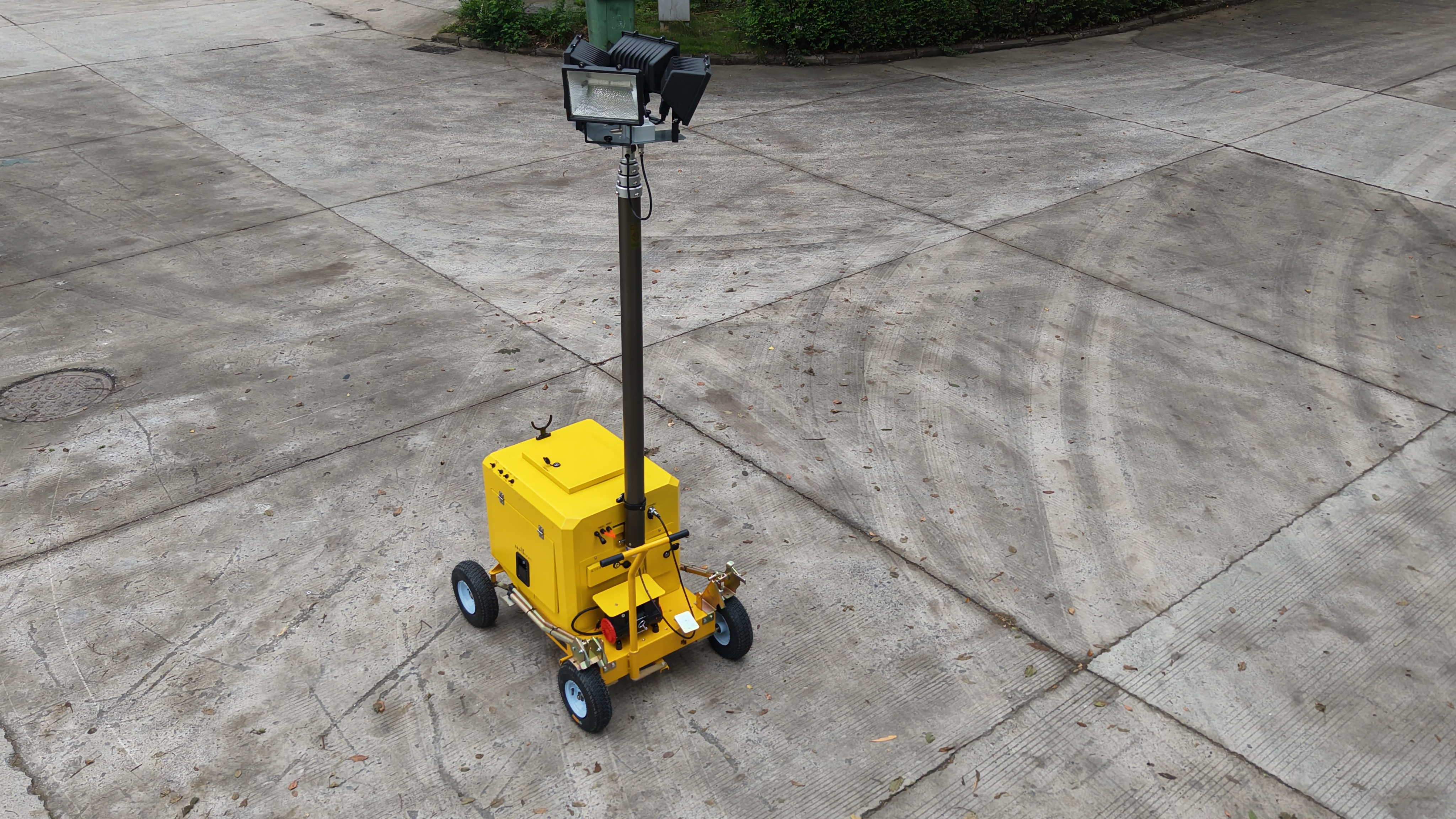
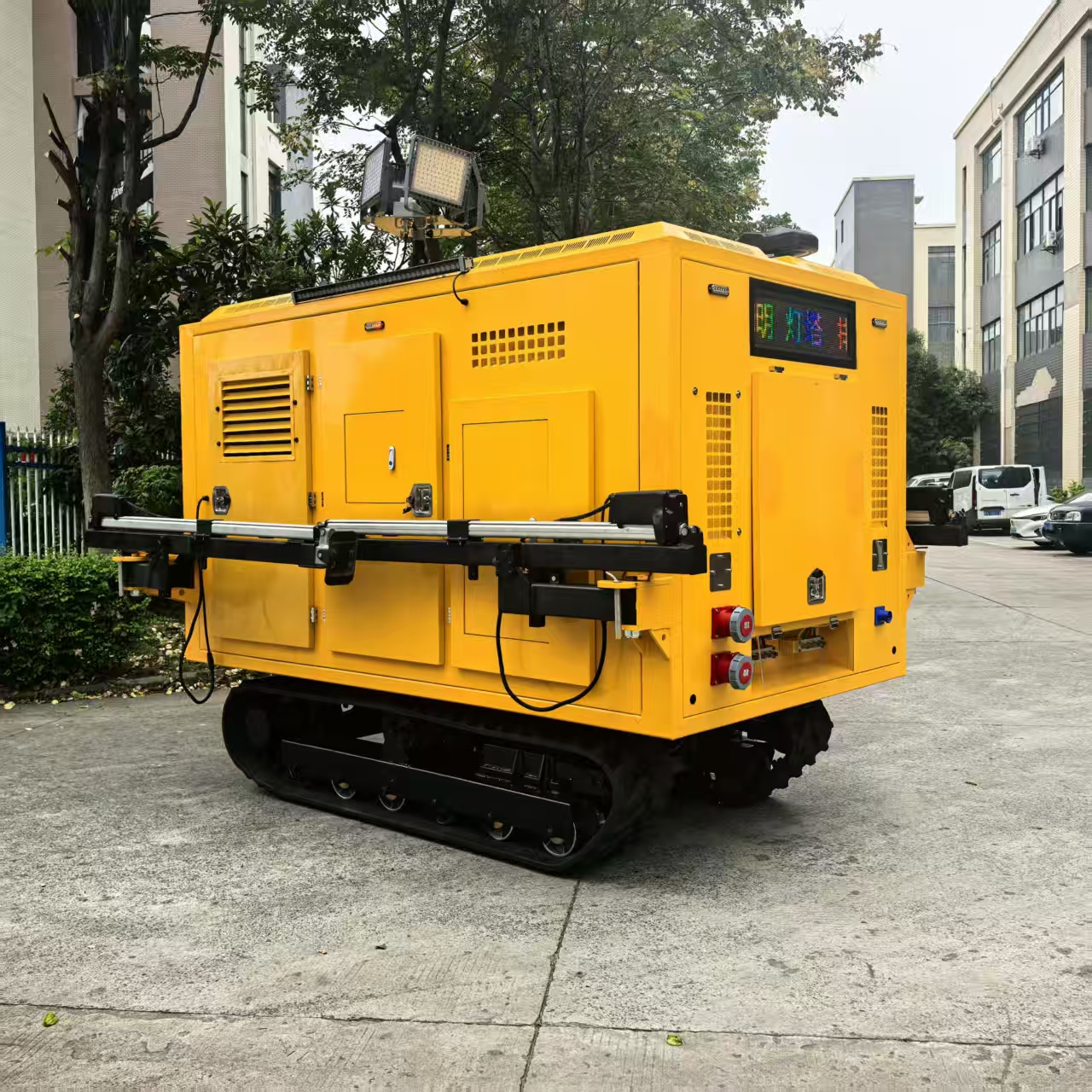
Night emergency repairs, road construction, accident response, and mining operations often take place in environments without a stable mains power supply. Temporary cabling is not only inefficient but also poses electrical safety hazards. Mobile lighting towers and self-loading lighting towers are designed precisely for such scenarios: integrating the light source, lifting mechanism, power supply unit, and mobility or load-bearing structure into one unit, enabling rapid entry into working condition upon arrival at the site and providing directional lighting for the work area. Anhui Rongpan Technology Co., Ltd., based in Xinzhan District, Hefei, conducts R&D and sales of emergency lighting and power generation equipment. Its products serve the power, municipal, firefighting, mining, and agricultural sectors, with emphasis on on-site usability and transport convenience.
2. Typical Application Scenarios of Mobile Lighting Towers
- Power and municipal emergency repair: Night line maintenance, pipeline network construction, and road maintenance require rapid lighting deployment. The mobile structure can be relocated with engineering vehicles, reducing temporary wiring workload.
- Firefighting and emergency response: Accident sites have requirements for lighting brightness and coverage. The tower can be deployed quickly to provide lighting support for rescue routes and work areas.
- Mining and agricultural operations: Open-air stockyards, loading and unloading areas, and field operations have high requirements for equipment mobility. Mobile lighting towers can be repositioned as the work area changes.
- Large events and temporary venues: As supplementary temporary lighting, they meet short-term lighting needs for exhibitions, assemblies, and similar occasions.
The common feature of the above scenarios is that lighting positions are not fixed and power supply conditions are uncertain. Therefore, when selecting equipment, particular attention should be paid to the compatibility between transfer method, deployment time, and power supply configuration. Specific configurations can be confirmed with Anhui Rongpan Technology based on on-site conditions.
III. Structural Features of Self-Loading Lighting Towers
The core of the self-loading lighting tower lies in the change in loading and unloading method. Traditional light towers rely on cranes or multiple personnel to move on and off vehicles, whereas the self-loading structure completes docking with and detachment from transport vehicles through its own mechanism, reducing dependence on auxiliary equipment. It is suitable for units with tight vehicle scheduling and dispersed work sites.
- Loading and unloading: The self-contained mechanism performs the on/off vehicle movements, reducing occupancy of lifting resources and facilitating single-person or minimal-person operation.
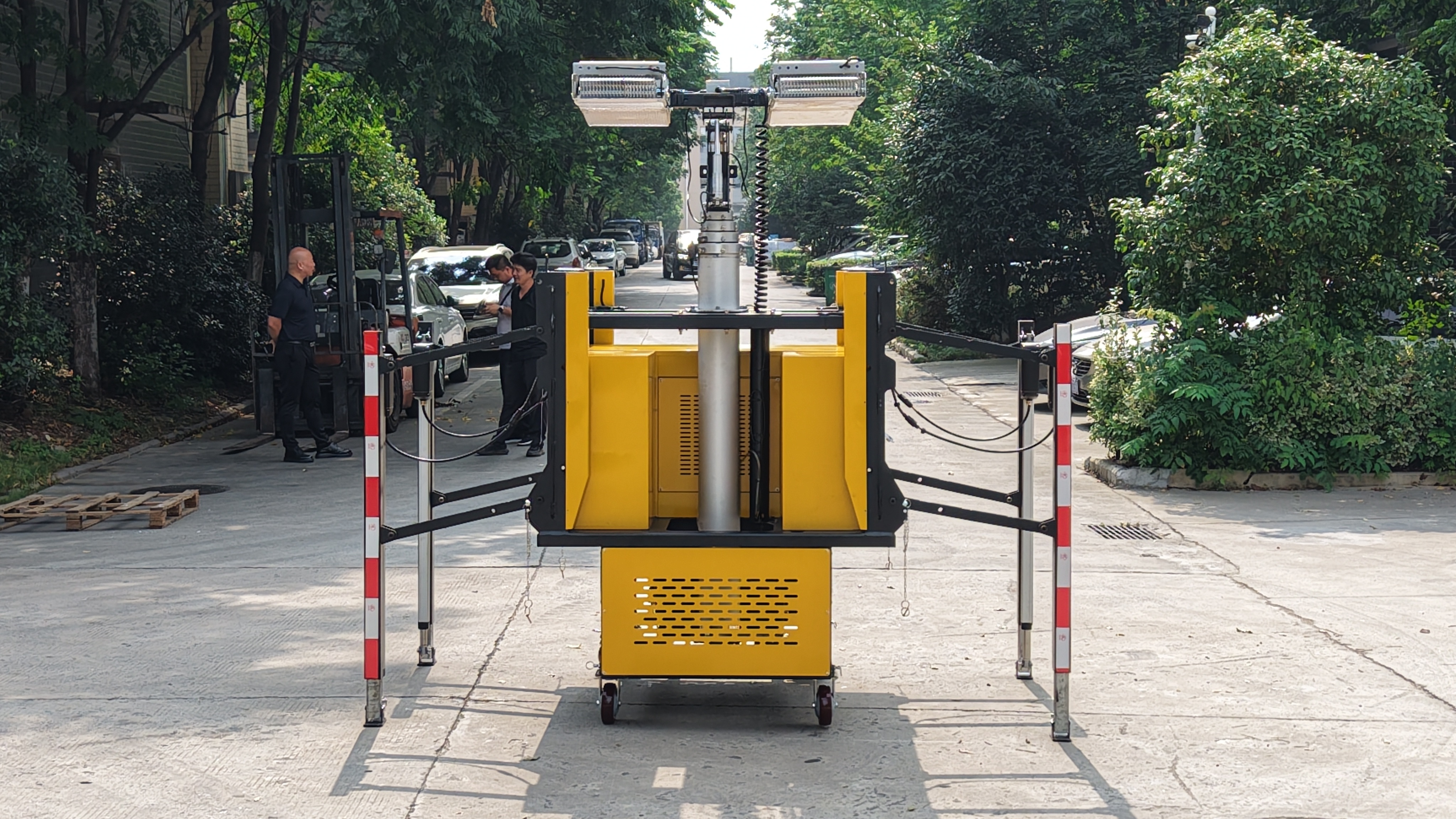
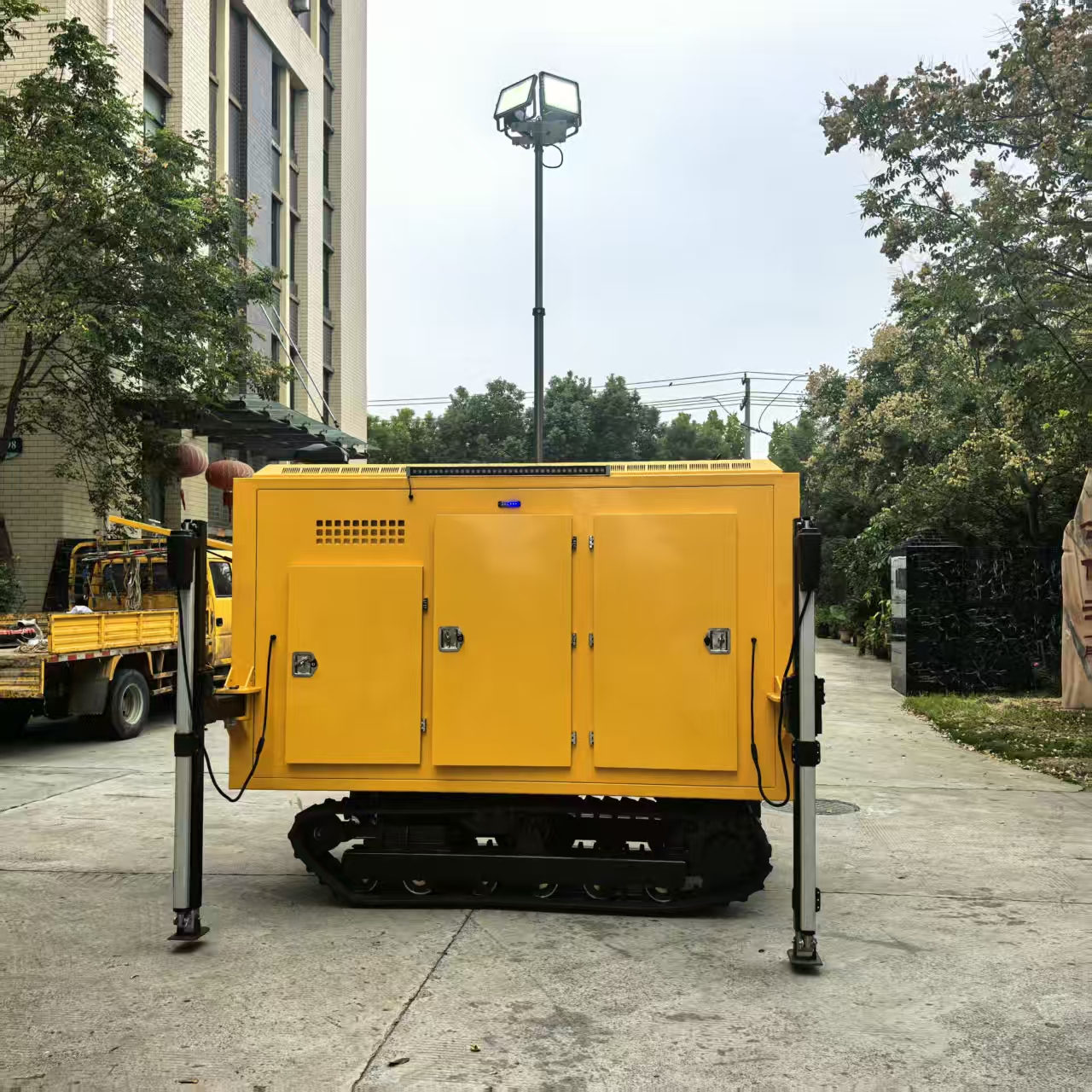
- Support and stability: During operation, the support structure expands the chassis load-bearing area, enhancing overall stability under outdoor ground conditions.
- Lifting and lighting deployment: The light mast is height-adjustable and the luminaire angle is adjustable, facilitating adjustment of illumination direction according to work surface height and range.
- Power supply integration: The generating unit and lighting unit are integrated, reducing on-site external wiring and shortening preparation time.
The goal of the structural design is to maintain efficiency throughout the cycle of "transport—deployment—operation—retrieval." During procurement, the necessity of the self-loading structure can be evaluated based on transfer frequency and operating radius.
IV. Key Considerations for Procurement and Engineering Selection
When selecting, it is recommended to start from the usage scenario and verify item by item: whether the transfer method matches commonly used vehicles; the lighting coverage required for the work surface; the match between continuous working duration and power supply method; the requirements of on-site ground conditions on the support structure; and the convenience of later maintenance and spare parts availability. For units requiring frequent relocation and dispersed work sites, the value of the self-loading structure is more evident; for short-duration operations in fixed areas, conventional mobile lighting towers can meet the requirements.
Anhui Rongpan Technology can provide configuration recommendations based on specific application scenarios. For detailed parameters such as luminaire power, lifting height, generating power, overall dimensions, and weight, please contact us to obtain them for verification against actual working conditions.