Application Scenarios and Demand Differences of Site Lighting
Site lighting undertakes temporary or mobile lighting tasks in scenarios such as power maintenance, municipal construction, firefighting operations, mining operations, and agricultural night production. The demand priorities for lighting vary significantly across different scenarios: power and municipal operations often require equipment that is easy to transport with vehicles and quick to deploy, with high requirements for lighting coverage and angle adjustment; firefighting and mining scenarios pay more attention to equipment stability and operational convenience under complex ground conditions; agricultural scenarios may involve long-term continuous use, posing practical challenges to heat dissipation structures and power supply compatibility. When selecting models, procurement personnel should first clarify the operating radius, ground conditions, power supply method, and movement frequency, and then make judgments on the structural form of the lighting. The product ideas accumulated by Anhui Rongpan Technology in the field of emergency lighting and power generation equipment are precisely developed around these actual working conditions.
Structural Features: From Mobility to Environmental Adaptability
Lamp Body and Bracket Design
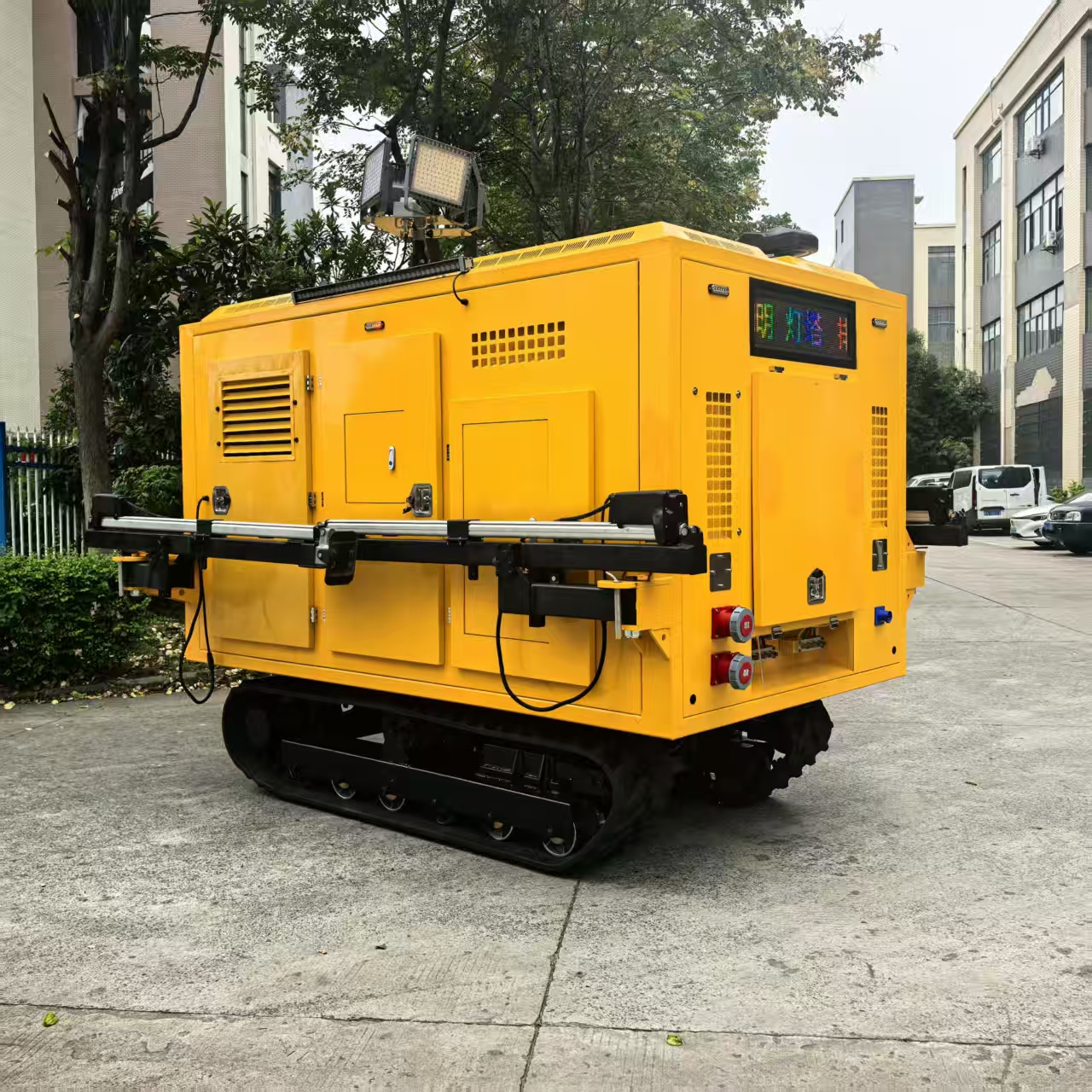
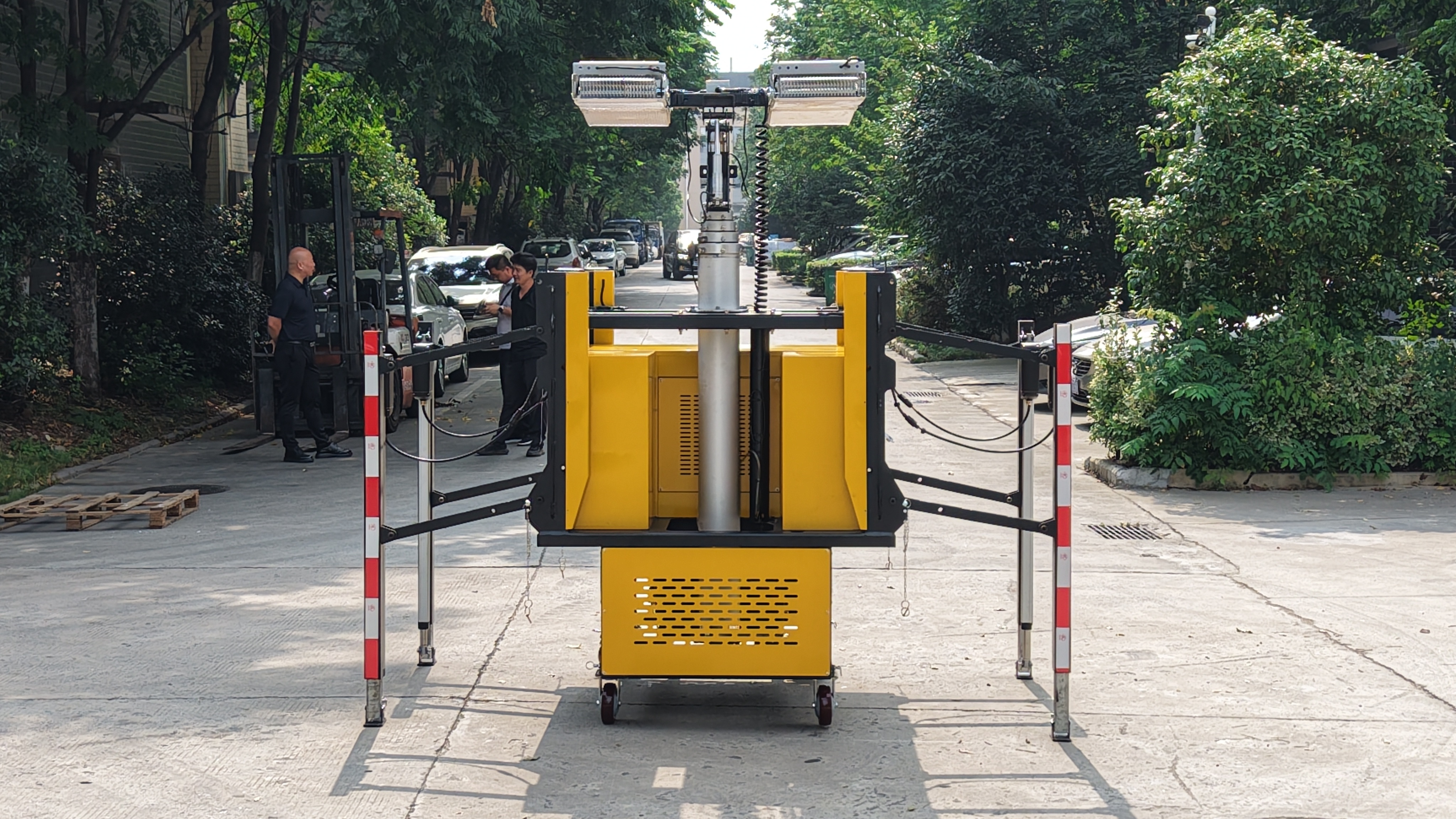
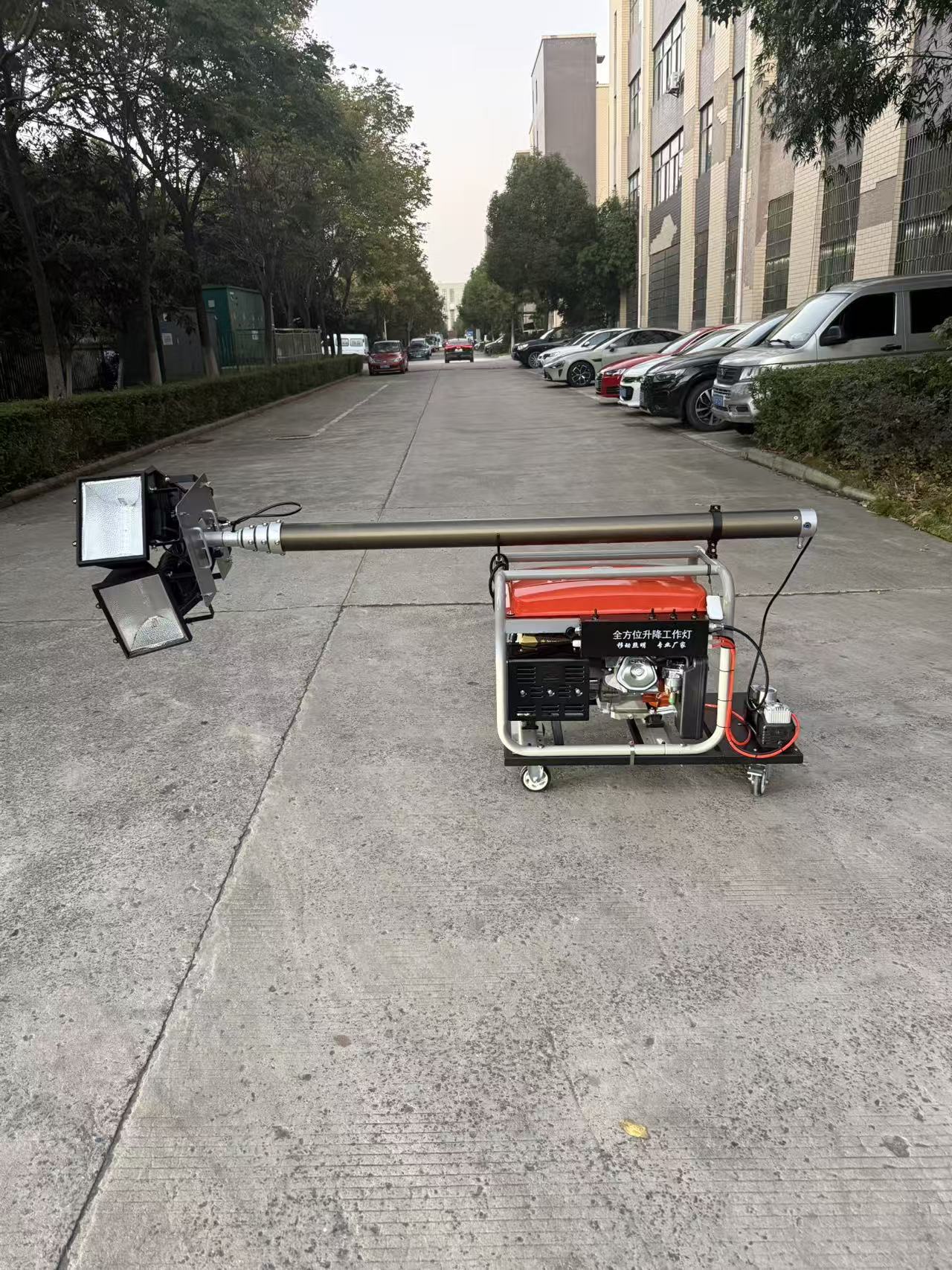
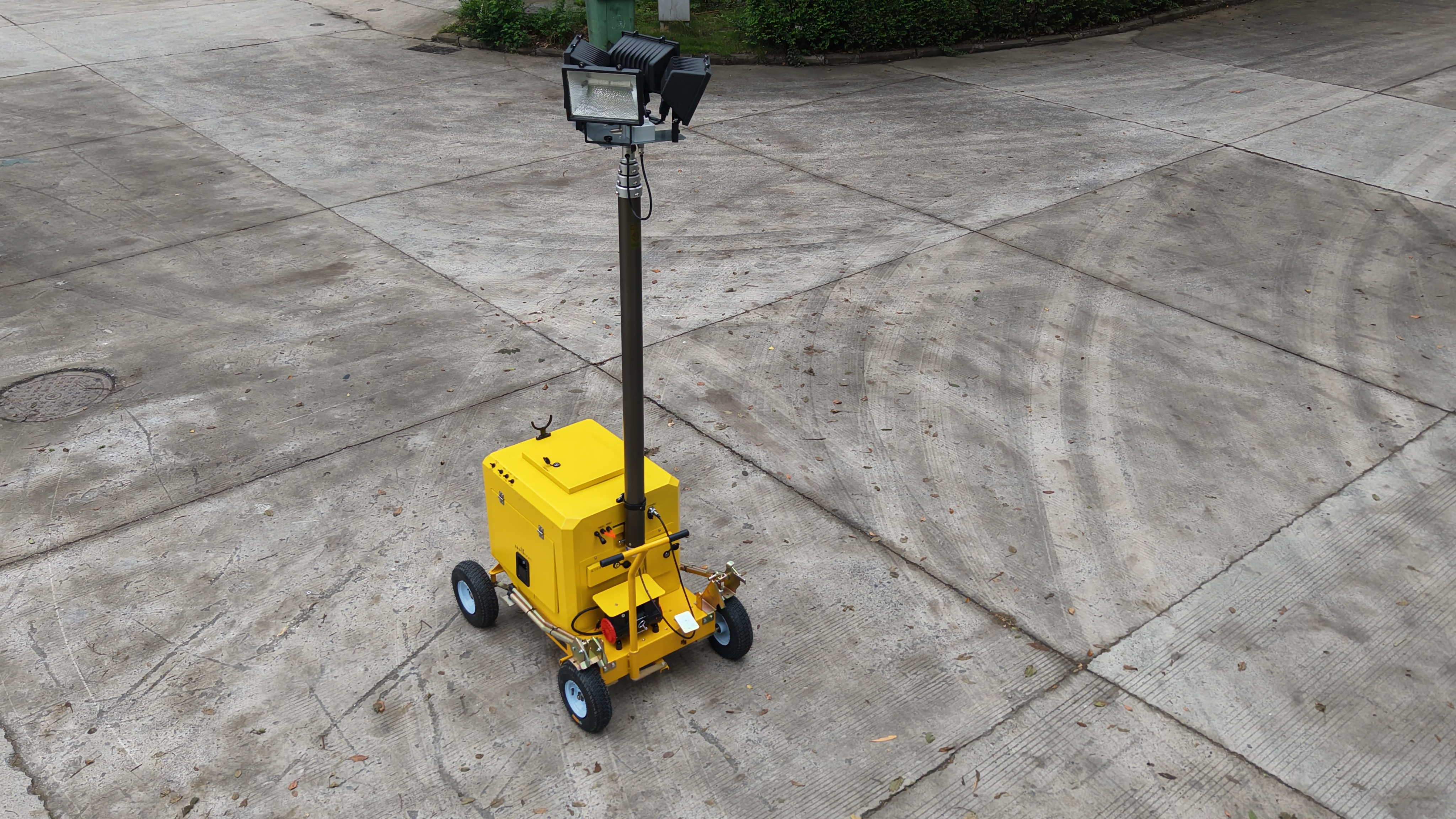
The common structure of site lighting fixtures includes the lamp body, lifting or adjustable bracket, power supply interface, and mobility components. The lamp body typically requires consideration of heat dissipation and protection to withstand outdoor environmental factors such as dust and rain; the bracket design affects the deployment speed of the fixture and the flexibility of beam angle adjustment. For operations requiring frequent relocation, folding or telescopic structures can reduce transportation space, but a balance should be struck between operational convenience and structural stability. During procurement, attention should be paid to the bracket locking method, the durability of adjustment joints, and the connection strength between the lamp body and bracket.
Power Supply and Mobility Options
The power supply method directly affects the application scope of site lighting fixtures. Common solutions include mains power connection, generator power supply, and built-in battery power supply. Mains power connection is suitable for fixed or semi-fixed work sites; generator power supply is suitable for field scenarios far from power sources, in which case the interface compatibility and power compatibility between the lighting fixture and power generation equipment need to be confirmed in advance; the built-in battery solution emphasizes portability and rapid deployment, but attention should be paid to battery life and charging management. Regarding mobility options, wheeled structures are suitable for long-distance movement on flat ground, while handle or backpack designs are more suited to short-distance carrying. Anhui Rongpan Technology recommends that procurement personnel select the matching power supply and mobility combination based on the actual power supply conditions and relocation frequency of the work site.
Protection and Operational Details
Outdoor site lighting fixtures should have basic dust and water resistance to cope with sudden weather changes. In terms of operational details, the switch layout, cable storage method, and interface protection cover design all affect daily use efficiency. For scenarios such as firefighting and mining, attention should also be paid to the wind resistance and anti-tipping performance of the fixtures on inclined ground. These structural characteristics usually cannot be judged by appearance alone and need to be evaluated in conjunction with user instructions and actual trials.
Procurement Selection Recommendations and Parameter Confirmation
When procuring site lighting fixtures, it is recommended to first clarify the core requirements of the work scenario: whether rapid deployment or continuous lighting capability is emphasized; whether external power supply is relied upon or self-contained power is required; whether short-distance manual carrying or wheeled towing is needed. After clarifying the requirements, screen products against their structural features. Since different manufacturers differ in lamp body materials, bracket forms, power supply configurations, and protection ratings, specific technical parameters should be based on actual product documentation. Anhui Rongpan Technology reminds that detailed parameters such as power, luminous flux, protection rating, and battery capacity should be obtained upon request to make judgments based on actual project conditions.
- Clarify the operating radius and ground conditions to determine mobility options and bracket stability requirements.
- Confirm on-site power supply conditions and select mains power, generator, or battery power solutions.
- Pay attention to lamp body heat dissipation, protection, and interface design to evaluate environmental adaptability.
- For detailed technical parameters, please contact Anhui Rongpan Technology; this article makes no specific numerical commitments.
Key Points for Scenario Adaptation and Use & Maintenance
After site lighting fixtures are put into operation, regular inspection of bracket locking mechanisms, cables, and connector status helps maintain lighting performance and operational safety. After use in dusty or humid environments, the lamp surface and heat dissipation areas should be cleaned promptly to avoid affecting heat dissipation performance. For mobile luminaires, adjustable components should be secured during relocation to reduce structural loosening caused by transport vibration. Anhui Rongpan Technology provides R&D and sales services for emergency lighting and power generation equipment for the power, municipal, firefighting, mining, and agricultural sectors, with a product philosophy emphasizing scenario adaptation and structural reliability. Procurement personnel who fully communicate operating conditions with suppliers during the selection stage can obtain configuration recommendations better suited to actual needs.